
What Is Vestibular Rehabilitation and How Does It Help Balance Disorders
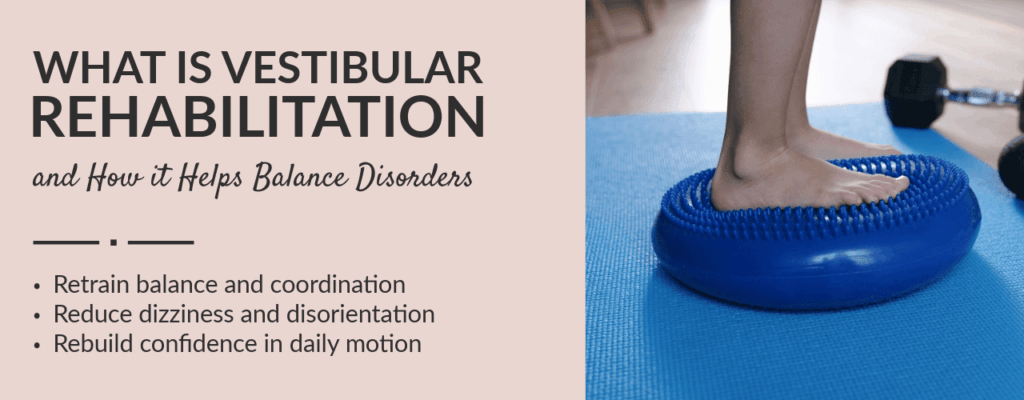
Feeling off balance or lightheaded can make simple activities like walking, turning your head, or getting out of bed feel difficult. These sensations often come from problems within the vestibular system, a network inside the inner ear that helps your brain detect movement and maintain stability. When this system is not working properly, it can cause dizziness, unsteadiness, and even nausea. The good news is that vestibular rehabilitation can help.
Understanding Vestibular Rehabilitation
Vestibular rehabilitation is a specialized form of physical therapy that focuses on treating dizziness, vertigo, and balance problems. It uses targeted exercises that train your brain and body to work together again. When part of the inner ear or balance system becomes damaged, the brain receives confusing signals about motion and position. Vestibular therapy helps your brain adapt and re-learn how to process these signals correctly.
Physical therapists who provide vestibular rehabilitation start with a detailed evaluation. They assess eye movements, balance, and posture to determine how the body responds to changes in position. These findings guide the creation of an individualized program based on the patient’s specific symptoms and triggers.
Common Conditions Treated with Vestibular Rehabilitation
- Benign paroxysmal positional vertigo (BPPV)
- Vestibular neuritis and labyrinthitis
- Meniere’s disease
- Concussion or head injury
- Chronic dizziness and imbalance from aging
Each of these conditions affects the body’s sense of motion differently, but they share one thing in common: the brain needs help recalibrating. Vestibular rehabilitation offers a safe, structured way to do that.
What to Expect During Therapy
The first session typically includes education about how the vestibular system works and why symptoms occur. Your therapist may perform gentle head and body movements to identify the cause of dizziness or to reposition inner ear crystals, which is often necessary in BPPV.
A treatment plan may include:
- Gaze stabilization exercises help control eye movements and improve focus during motion.
- Balance and coordination training that improves stability while walking or turning.
- Habituation exercises that gradually expose you to movements that trigger dizziness until your body adapts.
- Strengthening and posture training that support proper alignment and movement control.
These exercises can be challenging at first, but most people begin to notice improvement within a few weeks of consistent therapy.
The Benefits of Vestibular Rehabilitation
Vestibular rehabilitation is evidence-based and highly effective for many types of balance disorders. Research shows that patients who complete a structured program experience:
- Fewer dizzy episodes
- Better balance and coordination
- Reduced risk of falls
- Improved confidence in daily movement
- Greater independence in daily activities
Unlike medication, which only masks symptoms temporarily, vestibular therapy exercises helps retrain how your brain processes balance signals. This means results are long-lasting and support overall mobility and safety.
Why Timely Treatment Matters
Ignoring balance problems can cause more than frustration. People often start limiting movement to avoid dizziness, which can weaken muscles and reduce coordination over time. Early intervention through vestibular rehabilitation helps restore normal movement patterns before these changes become harder to correct.
If you’ve been struggling with dizziness, unsteadiness, or frequent loss of balance, help is available. Physical therapists trained in vestibular exercises can identify the cause of your symptoms and create a personalized plan to help you regain control.
At Revive Physical Therapy, our therapists use evidence-based techniques to restore balance, reduce dizziness, and improve confidence. We take time to understand your specific challenges and guide you toward safe, steady movement again.
Call Revive Physical Therapy today to learn how vestibular rehabilitation can help you move comfortably and confidently.